Take a Second Look continues to grow in popularity among students and professors across Notre Dame’s campus. Initially developed by Joshua McManaway, Ph.D., of the McGrath Institute for Church Life, and Fr. Kevin Grove, C.S.C. and Anthony Pagliarini, Ph.D., of the Department of Theology, the program invites students to reconsider the beauty and profundity of the Catholic faith they believe perhaps they have outgrown, dismissed, or simply set aside.
Take a Second Look accompanies students through sincere questioning and intellectual growth, preparing them not only to understand the faith more deeply but to live it for a lifetime.
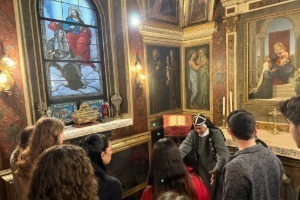
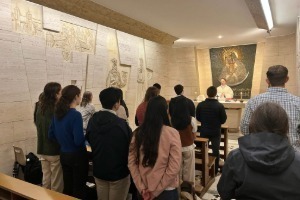
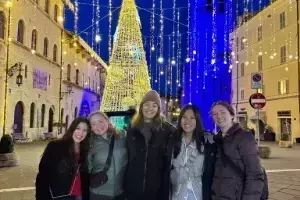
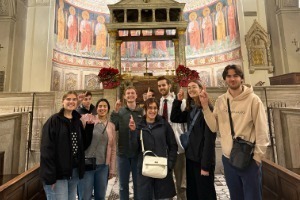
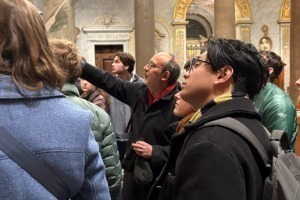
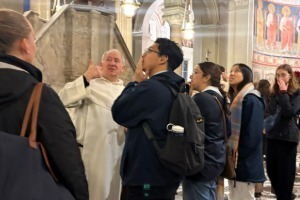
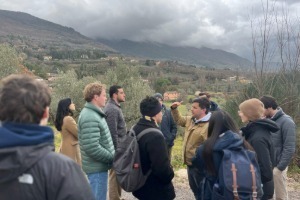
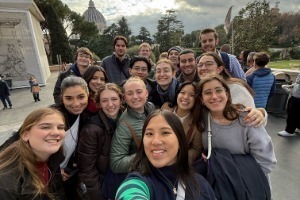
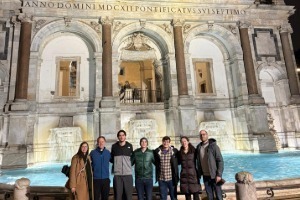
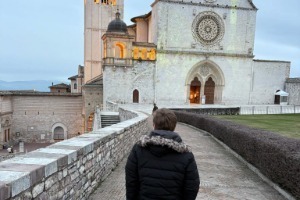
While the program’s cornerstone remains the popular freshman seminars, this year marked an important expansion: a one-credit senior theology course that culminated in an immersive, weeklong trip to Rome and Assisi in January. The course was designed especially for students double majoring in theology and another discipline such as finance, political science, or engineering, many of whom will pursue careers outside formal ministry.
“I was trying to capture the ‘theology and’ students,” McManaway explained. “A lot of people add theology as a kind of self-improvement measure. That’s good. But we wanted to transform that motivation and have the students ask themselves how the gift of a Notre Dame Theology education might be in service to others wherever they land after Notre Dame.”
The course began with theological grounding, especially reflections on the vocation of the laity. We first read documents from the Vatican: Apostolicam Actuositatem, then JP II's Christifideles Laici, then Francis' Gaudete et Exsultate. After that, we read Pieper and Byung-Chul Han to think about how a theologically-trained Catholic keeps up an intellectual life without participating in burnout culture.
“You can’t give what you don’t have,” McManaway said. “If they don’t have an inner life, they’re not going to be able to share that with anyone else.”
From there, the class turned outward, examining the realities of disaffiliation and considering how hospitality might serve as a quiet but powerful evangelical witness. Rather than programmatic or overtly “churchy” strategies, McManaway encouraged students to imagine opening their homes, building friendships, and allowing faith to emerge naturally in conversation.
The theme of the course was responsibility, a theme that shaped the culminating pilgrimage to Rome.
As a historian, McManaway has noticed a common tendency among students.
“Too often we study Christian history as though it happened to other people,” he said. “I wanted them to encounter these places and realize: you are now responsible for this. There is no one else coming to save you or the Church. These things were built because someone had the idea, the will, and the courage to act. In your own small ways, or big ways, that someone is you.”
The trip was not merely sightseeing, or even a pilgrimage in the narrow sense. It was a deliberate invitation to see the Church’s history as their own inheritance and therefore their charge to preserve and extend. The responsibility is not simply to maintain buildings, but to safeguard and embody what the saints themselves represent.
The Rome trip is part of a donor-funded, three-year initiative, with additional pilgrimages planned for 2027 and possibly another international location in 2028. The broader goal is to extend Take a Second Look beyond the freshman year, continuing to cultivate wonder, and finally sending students out as responsible adult Catholics.
“After that initial pass in the freshman seminars,” McManaway said, “how do we continue to get them to look? How do we help them keep wondering? And then, at the end of their time here, how do we help them take the gifts they’ve received and apply them outside the sphere of the Dome?”
For the McGrath Institute, that momentum aligns directly with its mission to form leaders for the Church.
“Take a Second Look embodies our mission to form Church leaders not only for parishes and schools, but for boardrooms, courtrooms, hospitals, and neighborhoods,” said John Cavadini, Ph.D., McGrath-Cavadini Director of the McGrath Institute for Church Life. “The future of the Church depends increasingly on well-formed lay men and women who understand the faith deeply and feel personally responsible for handing it on. This program helps students see that leadership in the Church is not someone else’s job, it is theirs.”
Photo Gallery