Conversations That Matter: Immigration and Human Flourishing at the Southern Border
“Welcoming the stranger” is a biblical injunction, yet discourse about migrants, refugees, and asylum seekers remains contentious and divisive. This conversation will explore the complex realities of immigration at the U.S.- Mexico border, considering human stories of migration, ethical principles, and a theological vision that can inform a genuinely Catholic response to migration. Panelists will explore what drives migration at the southern border, the social and legal realities migrants encounter, and the theological foundations required to recognize that responding to migration is essential to building an integral culture of life.
Thursday, April 24, 2025 | 3:30 p.m. EDT
Featured Panelists

Rev. Daniel G. Groody, C.S.C., Ph.D., is vice president and associate provost for undergraduate education and a professor of theology and global affairs. His major responsibilities include advancing undergraduate teaching, research, and outreach. Fr. Groody oversees initiatives related to the curriculum, academic integrity, advising, academic support, scholarly engagement, and scholars’ programs. He also provides leadership for the Advisory Committee on the Academic Code and Policy, and the Valedictorian and Salutatorian Selection Committee. In addition to his role in the provost’s office, Father Groody serves as a Fellow and Trustee of the University.
Rev. Daniel G. Groody, C.S.C., Ph.D., serves as vice president and associate provost for undergraduate education at the University of Notre Dame. He is also a professor of theology and global affairs, a trustee, and a fellow at the university.
Fr. Groody has written and contributed to several books and articles. His scholarship delves into the intersection of theology and migration, offering insights into the human experience of displacement and the role of faith in addressing social and global challenges. His book, A Theology of Migration: The Bodies of Refugees and the Body of Christ, received first-place honors from the Catholic Press Association.
Internationally recognized as an expert on migration and refugee issues, and drawing on research and speaking engagements in more than 50 countries, Father Groody has collaborated with institutions such as the U.S. Congress, the U.S. Conference of Catholic Bishops, the World Council of Churches, the Vatican, and the United Nations. He has also produced several films and documentaries, including Dying to Live: A Migrant’s Journey.
His engagement with policymakers, scholars and religious leaders underscores the integral relationship among the Christian faith, global justice, the dignity of the human person, and theological reflection. In addition to his research, scholarship, and teaching, Fr. Groody is a former downhill ski racer, loves woodworking, and once rode a bicycle from Portland, Maine, to Portland, Oregon.

The Most Reverend Mark J. Seitz, D.D., was born in Milwaukee, Wisconsin, the eldest of ten children. He was ordained a priest of the Diocese of Dallas in 1980 after earning a B.A. in Philosophy, a Master of Divinity, and an M.A. in Theology from the University of Dallas. He later received an M.A. in Liturgical Studies from St. John’s University in Minnesota, deepening his lifelong commitment to the Church’s liturgical tradition.
Following his ordination as a priest, Bishop Seitz served as a pastor at parishes in Garland, Waxahachie, and Dallas, Texas. He also taught Liturgy and Sacramental Theology at the University of Dallas and served as vice-rector and director of liturgy at Holy Trinity Seminary. In recognition of his service, Pope St. John Paul II named him a Prelate of Honor in 2004. In 2010, Fr. Seitz was ordained a bishop by Pope Benedict XVI and was appointed an Auxiliary Bishop in the Diocese of Dallas. Subsequently, in 2013, Pope Francis appointed him as the sixth Bishop of El Paso.
As bishop serving a borderland diocese whose sister city is Ciudad Juarez, Chihuahua, Bishop Seitz has devoted his ministry to advocating for the poor and vulnerable, particularly migrant families and refugees. He is an ardent defender of the life of the unborn and a tireless advocate for the dignity of all people, especially those seeking refuge and a better future. He believes that migrants enrich the communities where they settle and calls on the faithful to welcome them with compassion, love, and solidarity.
Bishop Seitz has a deep love for the sacred liturgy and has dedicated his life to advancing the liturgical renewal of the Second Vatican Council. His leadership reflects a commitment to fostering a richer, more vibrant and inclusive liturgical life in the Church, helping the faithful encounter Christ through the beauty of the church’s liturgy. In 2017, Bishop Seitz notably led the Diocese of El Paso in welcoming the Holy Father, Pope Francis, to the Borderland during his historic visit to Ciudad Juarez. The visit served as a powerful moment of prayer and solidarity with migrants and those affected by violence and poverty.
Bishop Seitz also led with compassion and unity during one of El Paso’s darkest moments— the tragic mass shooting on August 3, 2019, when a gunman opened fire at a local Walmart, killing 23 people and wounding 60 others. In the aftermath of this devastating attack, he provided spiritual guidance and pastoral care to a grieving community, offering a message of hope, love, and resilience in the face of hatred.
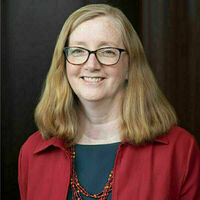
Maureen Sweeney, J.D., has directed the Immigration Clinic at Maryland Carey Law since 2004 and the Chacón Center for Immigrant Justice since its founding in 2020. She also teaches Immigration Law and Practicing Law in Spanish and is the faculty advisor of the student Immigration Law and Policy Association.
Professor Sweeney puts into action the ideal of engaged scholarship, primarily in the fields of asylum law and the law of immigration consequences of criminal convictions. She is the principal author of a chart for criminal defense practitioners of the Immigration Consequences of Criminal Convictions Under Maryland State Law, and has spoken and trained widely in the state on this topic. Her publications include Enforcing/Protection: The Danger of Chevron in Refugee Act Cases, 71 Administrative Law Review 127 (2019), which argues that federal courts should not give Chevron deference to decisions by the immigration court system because of the agency’s principal identity as a law enforcement agency and because the administrative law principles supporting Chevron do not apply in the context of humanitarian protection; Shadow Immigration Enforcement and Its Constitutional Dangers, 104 J. Crim. L. & Criminology 227 (2014), addressing the dangers of the entanglement of criminal law enforcement in immigration enforcement; and Fact or Fiction: The Legal Construction of Immigration Removal for Crimes, 27 Yale Journal on Regulation 47 (2010), an article that explains much of the theoretical, statutory, and enforcement background behind the Supreme Court’s 2010 Padilla v. Kentucky decision, in which the court required criminal defense counsel to advise about possible immigration consequences of a proposed plea.
Professor Sweeney has collaborated with the Maryland Office of the Public Defender to develop a statewide response to support and train defense attorneys to carry out their responsibilities under Padilla. She serves on the board of directors of the National Immigration Project of the National Lawyers Guild and on advisory committees for the ACLU of Maryland, Kids in Need of Defense in Baltimore, and the Annapolis Immigration Justice Network. She is the recipient of the 2020 University of Maryland, Baltimore (UMB) Public Servant of the Year Award, the 2019 University System of Maryland Board of Regents Faculty Award for Excellence in Public Service, the 2017 Public Service Award from the Hispanic Bar Association, and the 2016 Benjamin L. Cardin Distinguished Service Award from Maryland Legal Services.
Prior to coming to the law school, Professor Sweeney worked at Associated Catholic Charities Immigration Legal Services in Baltimore; the Migrant Legal Action Program in Washington, DC; Farmworker Legal Services of North Carolina in Raleigh, North Carolina; and the Texas Center for Immigrant Legal Assistance in Houston, Texas.
When the weather is good, Professor Sweeney likes to commute to work by bicycle from the home she shares in Baltimore City with her husband. She also likes to garden, hike, watch birds and spend time with her three adult children.