2024 - 2025 Organs & Origins Conference Series
'To What End?: Purpose and the Universe'
April 4 - 5, 2025
Geddes Hall - Andrews Auditorium
Please Note: The registration deadline is March 21, 2025 at 11:59 p.m.

“Hence it is clear that nature is nothing but a certain kind of art, i.e. the divine art, impressed upon things… It is as if the shipbuilder were able to give to timbers that by which they would move themselves to take the form of a ship.” - St. Thomas Aquinas
Aquinas’ confidence that nature is purposefully constructed by God via the purposiveness of creatures draws a negative reaction from many scientists, who would agree with Francis Bacon that the quest for teleology in nature “is barren, and like a virgin consecrated to God, brings forth no offspring.” And yet science, especially biology, finds teleological language difficult, if not impossible to avoid; as the French biophysicist Henri Atlan observed, “reasoning by final causes” is like a paramour “without whom a biologist cannot live but is ashamed to be seen with in public.” This is especially true of biological phenomena such as bodily organs - how might one describe a kidney without referencing its purpose?
In this final teaching conference of the Organs and Origins series co-sponsored by the College of Science and the McGrath Institute for Church Life, scientists, philosophers and theologians will come together to consider the question of purpose and meaning in the universe. Is it merely a projection of human striving onto the cosmos? Or is there something more about it which can contribute to our understanding and to the dialogue between the sciences, philosophy and theology?
Through generous funding from the John Templeton Foundation, 29 stipended fellowships are available for faculty and graduate students from across the disciplines who seek to enrich their teaching and research through this learning experience.
Registration Form (All participants and fellowship applicants must complete this.)
Graduate Student Fellowship Application
Faculty / Postdoc Fellowship Application
Registration Deadline: March 21, 2025 at 11:59 p.m.
Schedule*
| Friday, April 4, 2025 | *All events take place in Andrews Auditorium in Geddes Hall unless otherwise noted. |
| 4:30 - 5 p.m. | Welcome and Opening Remarks, by John Cavadini, Ph.D., McGrath-Cavadini Director, McGrath Institute for Church Life |
| 5 - 6:15 p.m. | "Galaxies, Stars, Planets, and Life: A Fruitful Universe" |
| 6:15 - 8 p.m. | Opening Dinner for Speakers and Fellows, Geddes Hall Coffeehouse |
| Saturday, April 5, 2025 | |
| 8 a.m. | Morning Prayer (optional), Geddes Hall Chapel |
| 8:15 a.m. | Breakfast for Speakers and Fellows, Geddes Hall Coffeehouse |
| 9 - 10:15 a.m. | “Does Evolution Lead Us to God?” |
| 10:15 - 10:45 a.m. | Refreshment Break |
| 10:45 a.m. - 12 p.m. | “Altruism, Ethics and Evolution” |
| 12 - 2 p.m. | Lunch Break |
| 2 - 3:15 p.m. | “Nature, Causes, and Teleology: Or Why Michael Corleone Moves to Vegas” |
| 3:15 - 3:45 p.m. | Refreshment Break |
| 4 - 5:15 p.m. | “Three Rival Versions of Teleological Inquiry: Cybernetic, Inverted, and Ecstatic Approaches” |
| 5:15 - 5:30 p.m. | Closing Remarks |
| 6 - 8 p.m. | Closing Dinner for Speakers and Fellows, Geddes Hall Coffeehouse |
Talk Descriptions
-
“Nature, Causes, and Teleology: Or Why Michael Corleone Moves to Vegas”
John O’ Callaghan, Ph.D., Associate Professor of Philosophy, University of Notre Dame
What is teleology? For a long period of time, it was thought that the progress of modern science had increasingly led to the banishment of teleological explanation from a properly scientific worldview. The ideal of mechanistic philosophy appealing to blind forces acting upon relatively inert matter held sway in the scientifically informed worldview of Western cultural leaders and their followers for a long period of time. Particularly important was the progress of evolutionary theory and the development of quantum theory, especially its commitment to indeterminacy. The goal of this presentation is simply to analyze what ‘teleology’ has meant historically and conceptually in order to clear up some misconceptions concerning its reality as a feature of the created world order. Among the things to be clarified are notions of natural agency, primary and secondary causality, the randomness of events versus the randomness of processes, design, cosmic or otherwise, teleology, and why Michael Corleone’s understanding of teleology led him to move the family to Las Vegas.
-
"Galaxies, Stars, Planets, and Life: A Fruitful Universe"
Jennifer Wiseman, Ph.D., Director Emeritus, Dialogue on Science, Ethics and Religion, American Association for the Advancement of Science
Modern telescopes are revealing astounding beauty and activity over cosmic time in the universe, from early infant galaxies to supernovae and new planetary systems. How did the universe become suitable for planets like our own? I will present some of the latest astronomical detections, including black holes, dark matter, gravitational waves, and exoplanets. Using the “time machine” of astronomy, I will discuss the steps of cosmic enrichment over billions of years that have enabled the formation of stars, planets, and the building blocks of life. I will also offer some philosophical and theological approaches for considering the significance of life and humanity in a universe vast in space and time.
-
“Three Rival Versions of Teleological Inquiry: Cybernetic, Inverted, and Ecstatic Approaches”
Paul Scherz, Ph.D., Our Lady of Guadalupe Professor of Theology, University of Notre DameMany scholars agree that teleological explanation is essential in biology, but there are deep disagreements in defining the meaning of teleology for the organism. In this talk, I distinguish three senses of teleology that have implications for biology, ethics, and theology. The first is a cybernetic or teleonomic one that thinks of organisms as having something like a computer program that governs behavior. The second is what Robert Spaemann calls an inversion of teleology, in which organisms and people are driven by the singular goal of self-preservation. Finally, there is the classic sense of teleology that involves a striving for an end external to the organism or for the enacting of the organism’s capacities, as described in the work of Spaemann, Georges Canguilhem, and Kurt Goldstein. I argue that failures to embrace this last understanding of teleology leads to mistakes in our understanding of animals, humans, and society.
-
“Altruism, Ethics and Evolution”
Alexander Pruss, Ph.D., Professor of Philosophy, Baylor UniversityThere are plausible evolutionary explanations for many occurrences of altruism. However, evolution at most explains the empirical facts of altruism, but not the normative ones, especially in cases where the altruism is admirable and yet does not contribute to our survival as a species. I conclude that a metaphysics which contains irreducible purposes fits well with the normative data, and points to a divine creator.
Speaker Bios
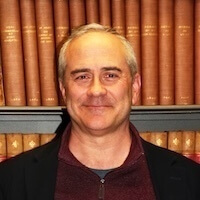
John O’Callaghan, Ph.D. is a Professor of Philosophy at Notre Dame University. He was educated at St. Norbert College where he majored in physics and mathematics, and the University of Notre Dame (MS, 1986; PhD, 1996) where he studied mathematics and philosophy. His philosophical studies focused upon the work of Thomas Aquinas. He has taught at Creighton University, the University of Portland, and the University of Notre Dame. He has written or edited a number of books and articles in the area of Thomistic studies, including Thomist Realism and the Linguistic Turn (2003), and Recovering Nature (with Thomas Hibbs, 1999). He is a past president of the American Catholic Philosophical Association (2013) and is a permanent member of the Pontifical Academy of St. Thomas Aquinas appointed by Pope Benedict XVI. He is currently working on two books, one on The Problem of God in Aquinas, and the other on the virtue of Misericordia.

Alexander Pruss, Ph.D. is professor of philosophy at Baylor University. His research focuses on metaphysics, philosophy of religion, probabilistic reasoning, and philosophy of mathematics. His first sole-authored book was The Principle of Sufficient Reason and his latest was Infinity, Causation and Paradox. He also has a PhD in mathematics and occasionally proves theorems, typically in connection with his philosophical work.

Paul Scherz, Ph.D. is the Our Lady of Guadalupe Professor of Theology at the University of Notre Dame. His research examines the intersection of theology, science, medicine, technology. His first book, Science and Christian Ethics (Cambridge, 2019), used Stoic virtue theory as a lens to examine the moral formation of scientists. More recently, his books Tomorrow’s Troubles (Georgetown, 2022) and The Ethics of Precision Medicine (Notre Dame, 2024) examined the role of quantitative risk analysis in contemporary life and health care. He has published articles on many topics in bioethics, such as human enhancement, genetic technology and end of life ethics. He is currently working on the ethics of artificial intelligence, which has led to his editing a collaborative work from the Dicastery for Culture and Education’s Centre for Digital Culture, Encountering Artificial Intelligence (Pickwick, 2024). Scherz holds a Ph.D. and M.T.S. in moral theology from the University of Notre Dame, a Ph.D. in genetics from Harvard University (2005), and a B.A. in molecular and cell biology from UC Berkeley (2001). He has previously taught at the Catholic University of America and the University of Virginia.
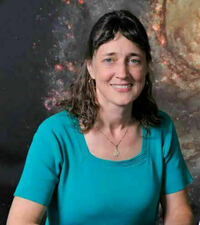
Jennifer Wiseman, Ph.D. is an astrophysicist, author, and speaker. She studies the process of star and planet formation in our galaxy using radio, optical, and infrared telescopes. She has worked with several international observatories and is currently a senior astrophysicist at the NASA Goddard Space Flight Center. Dr. Wiseman is also interested in national science policy and public science engagement. She served as a U.S. Congressional Science Fellow, and she is the Director Emeritus of the program of Dialogue on Science, Ethics, and Religion (DoSER) for the American Association for the Advancement of Science. Dr. Wiseman studied physics at MIT, co-discovering comet Wiseman-Skiff in 1987, and continued in astronomy with her doctoral research at Harvard. She is a Fellow of the American Scientific Affiliation, a network of Christians in Science. She frequently gives public talks on the excitement of scientific discovery. She grew up on an Arkansas farm enjoying late night stargazing walks with her parents and pets.
McGrath Institute Science & Religion Initiative - Faculty and Staff
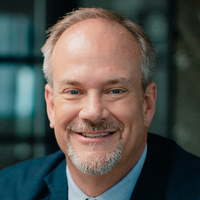
Christopher Baglow, Ph.D. is a theologian, Professor of the Practice and Director of the Science and Religion Initiative of the McGrath Institute for Church Life. His work is the culmination of two decades of faith and science scholarship and educational program creation, as well as a lengthy career in Catholic theological education. He is the author of Faith, Science and Reason: Theology on the Cutting Edge (2nd edition, Midwest Theological Forum, 2019) and Creation: A Catholic’s Guide to God and the Universe (Ave Maria Press, 2021). He serves as theological advisor to the Board of Directors of the Society of Catholic Scientists.

Heather Foucault-Camm, BS.c., PGCE, MS.c., M.A. is the Program Director for the Science and Religion Initiative at the McGrath Institute for Church Life, where she develops the pedagogical components of SRI programming and delivers presentations on content both in Bioethics and Artificial Intelligence. A veteran science teacher and curriculum expert, she has a BSc and MSc in the field of Chemistry (specializing in Physical Chemistry), a PGCE, has completed the program for the National Certificate in Health Care Ethics from the NCBC, and has an MA in Theology from the University of Notre Dame. Heather is currently a doctoral student in moral theology and is investigating the social implications of emerging technologies, particularly artificial intelligence. Heather is a Scholar Associate of the Society of Catholic Scientists.